Europe's Summer of Discontent: Overtourism Protests Spread as Cities Impose New Limits
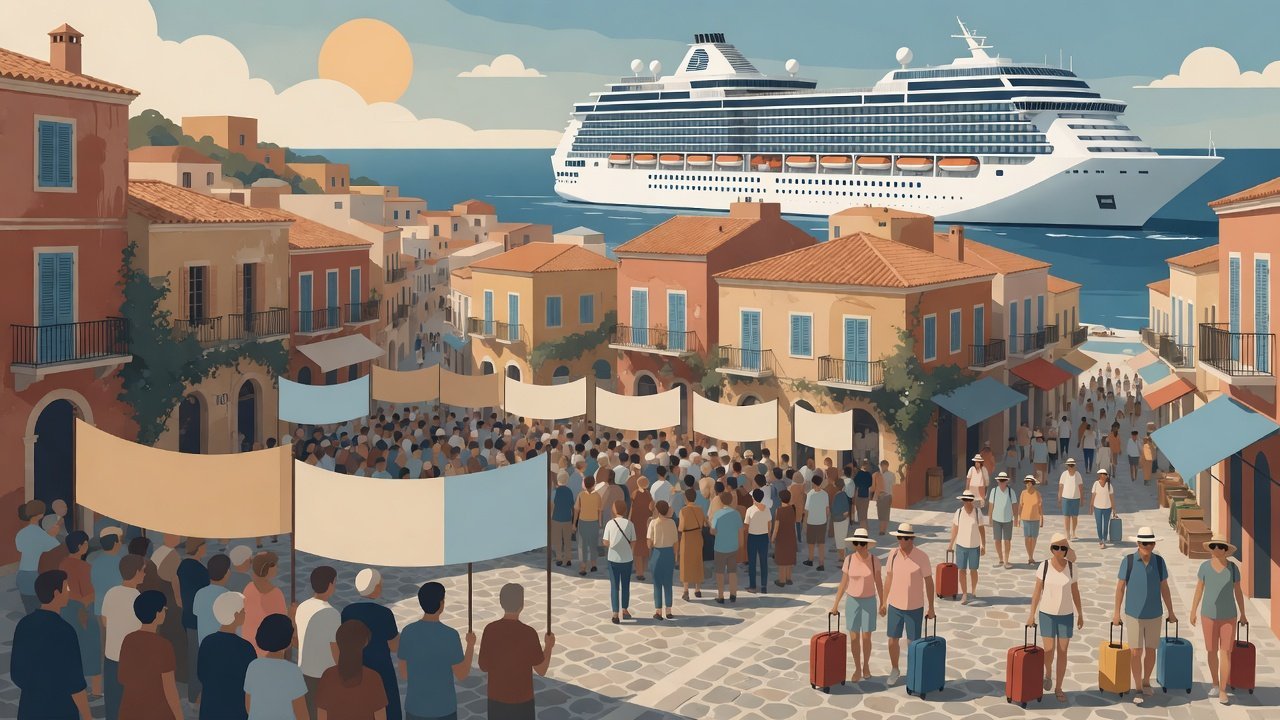
Anti-tourism demonstrations have swept more than 40 Spanish cities and spread across Europe, as Venice, Barcelona, Nice and Cannes tighten rules on visitors.
Commentary & Analysis ·
Verified key facts
- Forbes reported on 7 July 2026 that fresh protests against overtourism were continuing across European destinations at the height of the summer season.
- Travel And Tour World reported demonstrations have been recorded across more than 40 Spanish cities, with backlash also building in Italy, France, Portugal and Greece.
- Spain has removed around 65,000 non-compliant Airbnb listings and Barcelona plans to phase out short-term tourist rentals by 2028.
- Venice is keeping its summer entry tax for day-trippers, while Nice and Cannes began limiting cruise ship passengers from summer 2026.
- Travelers Today reported the protests are largely peaceful, organised by neighbourhood associations, unions and housing groups rather than aimed at individual tourists.
A Peak Season Defined by Placards
Europe's busiest travel season has arrived with a now-familiar soundtrack: chanting crowds in city squares. Forbes reported on 7 July that a new wave of protests against overtourism was under way across the continent, from Spain's islands to its biggest mainland cities.
The scale is striking. Travel And Tour World reported that demonstrations have been recorded across more than 40 Spanish cities. It described a backlash now reaching Barcelona, Venice, Rome, Milan and Paris, driven by housing shortages, cruise crowding and record visitor numbers.
What began as a largely Spanish phenomenon has become a continental conversation. France, Germany, Italy, Portugal, Greece and the United Kingdom have all seen residents organise against the pressures of mass tourism this summer, according to the same report.
What Is Driving the Anger
The grievances are consistent from city to city. Travelers Today reported that the core complaint is housing: rents and home prices have soared as long-term flats convert into short-term tourist lets, pricing locals out of their own neighbourhoods.
Crucially, the movement is not anti-tourist so much as anti-model. Travelers Today noted the protests are organised largely by neighbourhood associations, unions, and housing and sustainability groups. Their preferred tools are peaceful marches, banners and street-art campaigns, not confrontation with visitors.
Cruise tourism is a second flashpoint. Port cities argue that thousands of passengers disembarking for a few hours strain infrastructure while spending relatively little. That tension has pushed several Mediterranean destinations toward hard caps rather than gentle persuasion.
How Cities Are Responding
Governments are no longer just talking. Forbes and Travelers Today have tracked a growing list of concrete measures adopted for the 2026 season, and the toolkit keeps expanding.
- Venice has kept its summer entry tax for day-trippers, charging visitors on peak dates.
- Spain has removed around 65,000 Airbnb listings that broke local rules and introduced a tax targeting foreign property buyers.
- Barcelona intends to phase out short-term tourist rentals entirely by 2028.
- Nice and Cannes began limiting cruise ship passenger numbers from summer 2026.
- Florence is reducing outdoor dining sprawl in its historic centre.
Each measure is contested. Hosts and hoteliers warn of lost income, while housing campaigners say the steps do not go far enough. But the direction of travel is clear: Europe's most visited cities are moving from marketing themselves to managing themselves.
The Albanian Flashpoint
The debate is no longer confined to established hotspots. Forbes reported that tens of thousands of Albanians have protested against plans by Ivanka Trump and Jared Kushner for a luxury hotel development on Sazan, a small island off the Albanian coast.
What started as an environmental objection over fragile island ecosystems has widened into a national argument about corruption and who benefits from luxury tourism, according to the Forbes report. It is a reminder that emerging destinations are watching Barcelona and Venice closely, and drawing their own conclusions.
What Travellers Should Expect
For visitors, the practical effects are manageable but real. Expect entry fees in Venice on busy days, fewer short-term rental options in Spanish cities, and possible changes to cruise itineraries calling at Nice or Cannes. Booking licensed accommodation early matters more than it did even a year ago.
Travel analysts increasingly advise shifting trips away from the July and August crush. Forbes has argued that travellers should rethink both when and how they visit Europe, pointing to shoulder-season travel and secondary cities as ways to spend money where it is welcomed.
Etiquette matters too. Residents' groups stress they want visitors who stay longer, spend locally and respect neighbourhood life. The tourist who books a licensed guesthouse in a smaller town is part of the solution being asked for.
A Reckoning, Not a Rejection
Europe is not closing its doors. Tourism remains a pillar of the Spanish, Italian, French and Greek economies, and arrivals keep setting records. What is changing is the social licence: residents are demanding that growth be capped, taxed and redirected before their cities become stage sets.
The next test comes quickly. If this summer passes without meaningful relief on housing and crowding, campaigners have signalled that protests will continue into 2027. City halls, meanwhile, will be watching whether entry fees and rental caps actually thin the crowds. The outcome will shape how the world's most visited continent welcomes its guests for a generation.
Sources
- Forbes - More Protests Show The High Cost Of Overtourism In Europe (7 July 2026)
- Travel And Tour World - Anti-tourism uprising sweeping Europe as major cities face backlash (July 2026)
- Travelers Today - Southern Europe Overtourism 2026: What New Caps, Fees, and Spain's Protests Mean for Travelers (25 June 2026)
- Forbes - Overtourism Europe 2026: Rethinking When And How To Travel (21 September 2025)
You may also like to read
Pamplona Packs Away the Red Scarves: San Fermin 2026 Closes with Two Gorings and Big Crowds
The San Fermin festival ended on 14 July after eight bull runs that left dozens needing treatment, including an 86-year-old Briton, amid heavy participation.

Spanish prime minister's brother convicted and barred from office in nepotism case
A Badajoz court convicted David Sanchez of administrative misconduct over a tailor-made cultural post, deepening political pressure on Pedro Sanchez's government.

Guwahati-Dubai Direct Flights: Northeast India Gets UAE Link
Air India Express becomes the first airline to link Northeast India directly with the UAE, with Guwahati-Dubai and Guwahati-Abu Dhabi flights from August 2026.

A 3,000-Year-Old Bestseller: Nolan's Film Sends Homer's Odyssey Up the Charts
Sales of Homer's Odyssey are up 76% this year ahead of Christopher Nolan's 17 July film, with Greek publishers reporting spikes of up to 400%.