Africa's Malaria Vaccine Rollout Saves Lives But Faces a Fourth-Dose Test
More than 52 million malaria vaccine doses have reached 25 African countries, yet completing the full four-dose schedule remains a stubborn challenge.
Commentary & Analysis ·
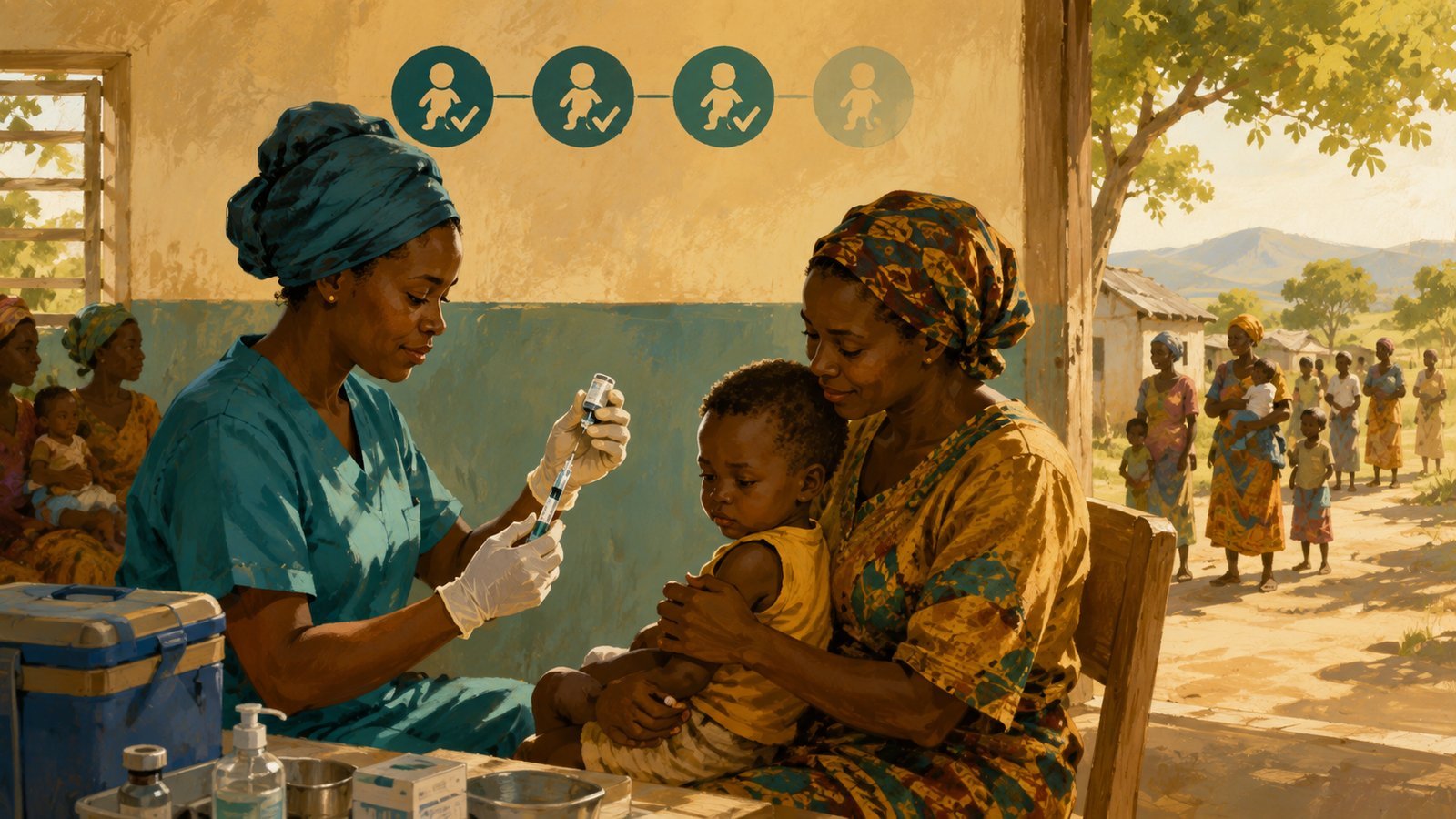
Verified key facts
- More than 52 million malaria vaccine doses have reached 25 high-risk African countries with Gavi support.
- 25 endemic African countries now offer malaria vaccines within childhood immunisation programmes.
- In a pilot across Ghana, Kenya and Malawi, coverage reached about 80% for the first dose but fell to 46% for the fourth.
- The rollout faces funding constraints following sweeping foreign aid cuts.
A vaccine campaign at scale
The rollout of malaria vaccines across Africa has reached a significant scale. According to figures reported in July 2026, more than 52 million doses have been distributed. That effort has been supported by Gavi, the Vaccine Alliance.
The reach spans much of the continent's malaria belt. Doses have reached 25 high-risk African countries. In total, 25 endemic countries now offer malaria vaccines within childhood immunisation programmes.
The ambition is large. More than 10 million children each year are targeted for malaria vaccination across these countries. The vaccines form part of national malaria control plans.
Evidence the vaccines work
The push rests on a growing evidence base. The WHO recommended the RTS,S vaccine for wider use in 2021. Pilot studies had found it reduced deaths among eligible children by 13%.
A newer vaccine has since joined the effort. In separate clinical trials across several African countries, both RTS,S and the newer R21 vaccine cut clinical malaria cases. The reduction exceeded 50% during the first year after three doses.
In May 2026 the WHO said new evidence confirmed the vaccine saves child lives. It projected high impact in the wider rollout. These findings strengthened the case for continued expansion.
The fourth-dose problem
A central challenge is completing the full schedule. The vaccines require four doses to deliver their intended protection. Reaching that fourth dose has proved difficult.
Pilot data illustrate the gap. In a programme across 158 districts in Ghana, Kenya and Malawi, coverage reached about 80% for the first shot. It dropped to 46% for the fourth dose, given between 22 and 24 months.
The reasons are practical rather than about vaccine confidence. Children missed later doses because of transport costs and a lack of reminders. Poor follow-up and competing work or childcare responsibilities also played a part.
- Over 52 million doses delivered to 25 high-risk African countries
- Both RTS,S and R21 cut clinical malaria by more than 50% after three doses
- First-dose coverage near 80% but fourth-dose coverage around 46%
- Missed doses driven by transport costs, weak follow-up and reminders
Why completion matters
The dosing schedule is not arbitrary. The later doses are designed to sustain protection over time. Children who miss them may not gain the vaccine's full benefit.
That makes the drop-off a public health concern, not just an administrative one. Medical Xpress reported that completing all four doses is a key test for the rollout. Systems that deliver first doses well must also deliver the last.
Solutions discussed include better reminders and follow-up. Reducing the practical barriers families face is central. Integrating later doses with other routine health contacts is one approach under consideration.
A funding cloud over progress
The rollout also faces financial pressure. Reporting described a stark constraint after sweeping foreign aid cuts. Reductions by the US administration and others have squeezed global health budgets.
That backdrop makes efficiency more important. Every dose that goes unused, or every child who misses a later shot, represents lost value. Funding limits raise the stakes for completing schedules.
Gavi and partner countries continue to support the programme. The scale already achieved shows what is possible. Sustaining and completing it is the next hurdle.
The road ahead
Malaria remains one of the world's leading causes of child death. The vaccines are not a standalone solution. They work alongside bed nets, testing and treatment as part of a broader strategy.
The story of 2026 is one of real progress and real gaps. Millions of children are being reached, and evidence of lives saved is mounting. The unfinished task is making sure protection is completed, not just started.
Decisions about vaccination for any individual child rest with families and health professionals. Parents with questions are encouraged to speak with local health services. This report describes a public health programme rather than individual medical advice.
Sources
- Medical Xpress / AP - The new malaria vaccine helps in Africa but faces a test: completing all 4 doses (July 2026)
- WHO - New evidence confirms malaria vaccine saves child lives and will have high impact in wider rollout (8 May 2026)
- ABC News - The new malaria vaccine helps in Africa but faces dosing test (July 2026)
You may also like to read
Ebola Outbreak in DR Congo and Uganda Passes 2,000 Confirmed Cases
The Bundibugyo strain of Ebola continues to spread in eastern DR Congo, with 754 deaths reported and Ituri province at the centre of the response.

WHO Says Up to 45% of Dementia Risk Could Be Prevented or Delayed
New WHO guidelines argue that tobacco, air pollution, isolation and untreated illness drive a large share of dementia risk that societies can act on.

WHO Warns of 'More Deadly Weeks' as Europe's Heat Emergency Persists
With another heatwave building and preparedness gaps exposed, the WHO says fewer than half of European states have proper heat-health action plans.
India Bans 16 Fixed-Dose Combination Drugs Over Safety
The health ministry has banned 16 fixed-dose combination drugs, saying they lacked therapeutic justification and posed avoidable health risks.