Last to first: Waerenskjold wins the fastest road stage in Tour de France history
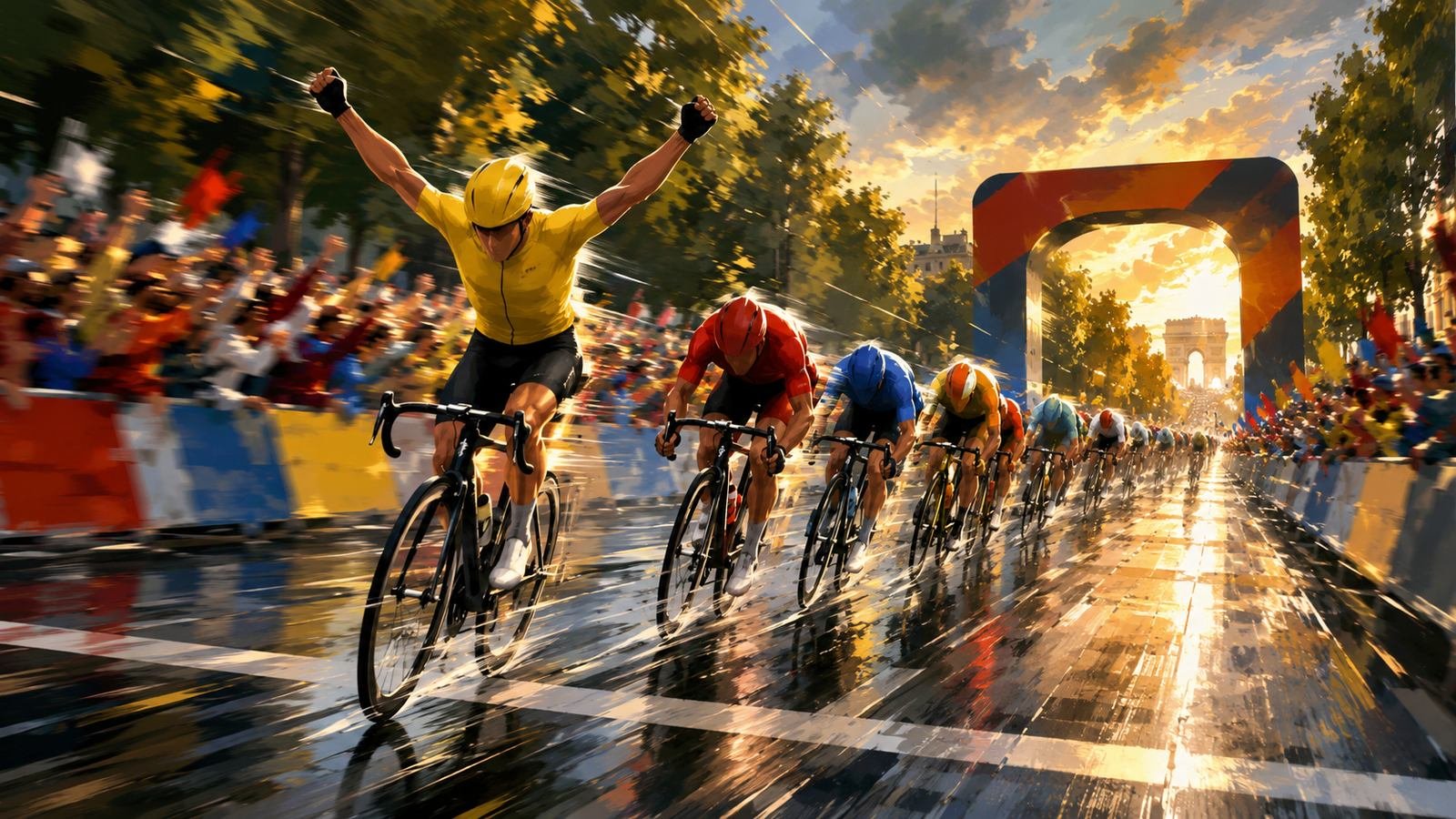
Soren Waerenskjold won the fastest road stage in Tour de France history at about 50.9km/h into Nevers, as Tadej Pogacar kept his 3:36 lead over Jonas Vingegaard.
Commentary & Analysis ·
Verified key facts
- Soren Waerenskjold won stage 11 from Vichy to Nevers, the fastest road stage in Tour history at roughly 50.9km/h, Cycling Weekly reported
- The 161.3km stage was completed in 3:10:06, beating Mario Cipollini's 50.36km/h record from stage four in 1999
- Waerenskjold beat Olav Kooij (Decathlon CMA CGM) and Jasper Philipsen (Alpecin-Premier Tech) in the sprint
- The Norwegian had finished last at Le Lioran only 24 hours earlier, completing a last-to-first turnaround
- Tadej Pogacar retained the yellow jersey with a 3:36 lead over Jonas Vingegaard, Cyclingnews reported
A record that stood for 26 years falls in Nevers
Stage 11 of the 2026 Tour de France was always billed as one for the sprinters. Nobody predicted it would rewrite the record books. Norway's Soren Waerenskjold of Uno-X Mobility won the 161.3-kilometre run from Vichy to Nevers on Wednesday at the end of the fastest road stage in the race's 123-year history, Cycling Weekly reported.
The peloton covered the distance in three hours, ten minutes and six seconds. That works out at an average speed of roughly 50.9km/h across nearly four hours of racing. Cycling Weekly reported that the previous benchmark had stood since 1999, when Mario Cipollini won a stage at an average of 50.36km/h. That mark had survived 26 editions of the Tour.
From last man on the road to first
The result carried a storyline that bordered on the absurd. Cycling Up To Date reported that Waerenskjold had finished dead last at Le Lioran barely 24 hours earlier, dragging himself through the mountains at the very back of the race. In Nevers he was the first man across the line, a last-to-first reversal completed within a single day of racing.
The Boston Globe reported that Waerenskjold launched his sprint from distance and simply held everyone off. Olav Kooij of Decathlon CMA CGM took second, with Jasper Philipsen of Alpecin-Premier Tech third. For Uno-X Mobility, the Norwegian squad racing its home sponsor's colours across France, it was another landmark stage victory in a breakthrough Tour.
Why the race went so fast
Conditions conspired to produce the record. The stage began on wet roads around Vichy, Al Jazeera reported, yet the racing never relented. A stiff tailwind, a gently descending profile and a peloton unwilling to let any breakaway establish itself kept the speed pinned above 50km/h for most of the afternoon. Modern aerodynamics did the rest.
Cycling Weekly's analysis carried a telling phrase from within the peloton: this is the new normal. Riders and sports directors pointed to faster equipment, deeper teams and relentless fights for position as the drivers of ever-increasing speeds. The 1999 record fell not to a freak day, in their view, but to the accumulated evolution of the sport.
Pogacar untroubled in yellow
For all the drama at the front, the general classification barely moved. Cyclingnews reported that Tadej Pogacar finished safely in the bunch and remains in yellow, 3:36 ahead of Jonas Vingegaard. The four-time champion has controlled the race since the first summit finishes and remains firmly on course for a fifth Tour de France title.
- Stage 11 winner: Soren Waerenskjold (Uno-X Mobility), 3:10:06
- Second: Olav Kooij (Decathlon CMA CGM)
- Third: Jasper Philipsen (Alpecin-Premier Tech)
- GC: Pogacar leads Vingegaard by 3:36
The flat run to Nevers offered the GC contenders a rare day of relative calm before the race turns back towards the high mountains. Vingegaard's Visma team rode near the front all day but never attempted anything ambitious. At 50.9km/h, simply staying upright and attentive counted as a good day's work for the men chasing yellow.
A breakthrough Tour for Norwegian sprinting
Waerenskjold's victory extends a remarkable Tour for Uno-X Mobility, with Cyclingnews noting the win as another stage success for the Norwegian team. Built around Scandinavian riders and long treated as plucky outsiders, the squad has now beaten the established sprint trains at their own game. Waerenskjold's blend of raw power and positioning has made him a genuine force.
At 26, the Norwegian profiles as a sprinter for the sport's new era: heavier and more powerful than the pure fast men, capable of surviving harder stages and launching long. Beating Kooij and Philipsen in a straight fight, on the fastest day the Tour has ever seen, removes any lingering doubt about his class.
What comes next
The sprinters' opportunities are thinning out as the third week approaches. Every remaining flat finish now carries extra urgency for Philipsen, Kooij and the teams that have yet to win. For the GC men, the truce ends quickly, with the race heading towards terrain where Pogacar and Vingegaard will resume their duel.
The record itself may not last long. If riders are correct that these speeds are the new normal, another windy, downhill-trending afternoon could push the average beyond 51km/h. Cipollini's mark endured for 26 years. Few in the 2026 peloton expect Waerenskjold's to survive anything like that long, which is perhaps the day's most striking conclusion.
Sources
- Cycling Weekly - How the Tour de France speed record was shattered on stage 11 (15 July 2026)
- Cyclingnews - Tour de France 2026 GC standings, Pogacar remains in yellow (15 July 2026)
- Al Jazeera - Norway's Waerenskjold wins fastest Tour de France stage in history (15 July 2026)
- The Boston Globe - Waerenskjold wins fastest ever stage as Pogacar protects lead (15 July 2026)
You may also like to read

India Women Win First Lord's Test by 270 Runs vs England
Kranti Gaud took seven wickets and Yastika Bhatia hit 113 as India beat England by 270 runs in the first women's Test ever staged at Lord's.

Linda Noskova Wins Wimbledon 2026, Beats Muchova in Czech Final
Linda Noskova defeated Karolina Muchova 6-2, 5-7, 6-3 to win the Wimbledon 2026 women's title, becoming the youngest champion at SW19 since Petra Kvitova in 2011.

Spain Beat France 2-0 to Reach World Cup 2026 Final
Mikel Oyarzabal's penalty and Pedro Porro's strike sent Spain past France 2-0 in Dallas, booking their first FIFA World Cup final since their 2010 triumph.

Sinner consolidates No.1 as Zverev climbs and wildcard Fery rockets 78 places
Jannik Sinner tightened his grip on world No.1 after Wimbledon as Alexander Zverev rose to second and wildcard hero Arthur Fery rocketed 78 places to 36th.